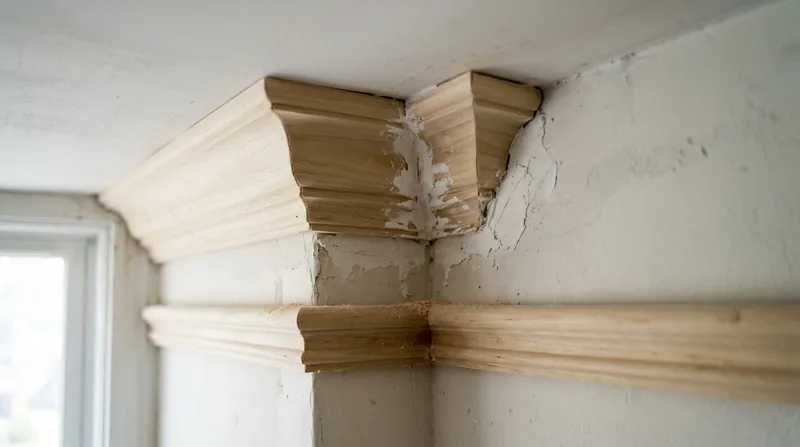




Crown Molding & Baseboard Installation in Cincinnati demands more than a nail gun and a level. Cincinnati's period homes, from the Italianate rowhouses of Over-the-Rhine to the brick bungalows of Hyde Park and the American Foursquares scattered across Walnut Hills and Oakley, were built with exacting trim carpentry standards. Crown molding and baseboard profiles in these homes follow Victorian and Italianate conventions that don't forgive gaps, misaligned joints, or poor caulk lines. Modern homes across the outer suburbs of West Chester, Mason, and Fairfield expect clean, crisp lines and tight coped joints. We install crown molding, baseboards, chair rail, and window trim to match existing profiles or deliver the finish standard your home's architecture demands.
Why Crown Molding and Baseboard Installation Matters in Cincinnati's Historic and Modern Homes
Cincinnati's residential stock spans 150 years of building styles, each with its own trim vocabulary. The steep hillside homes of Mount Adams, Price Hill, and Clifton were constructed with deep crown molding and tall baseboards that frame rooms with architectural weight. Freeze-thaw cycles and Cincinnati's four-season climate create seasonal wood movement, which means poorly fitted trim splits, gaps widen, and caulk fails. Baseboard installed without accounting for subfloor settlement or foundation movement will separate from walls within a season. Crown molding that isn't properly coped at inside corners will open up as the wood responds to humidity changes. Quality installation uses the right fastening methods, respects seasonal wood movement, and finishes with caulk lines that hold.
- Coped joints at inside corners remain tight as wood moves with seasonal humidity swings.
- Proper fastening into studs and blocking prevents baseboard separation and nail pops.
- Caulk lines stay clean and don't shrink or crack when the material underneath moves.
- Matching existing profiles on period homes preserves architectural continuity and resale value.
- Modern crisp lines require precise miter cuts and clean finishing on contemporary homes.
The difference between trim that looks right for 20 years and trim that gaps and fails within a few seasons comes down to understanding wood movement, using the right joint technique, and finishing with patience.
Cincinnati trim standards: Over-the-Rhine and Clifton Victorians expect deep crown molding with tight coped joints and period-correct profiles. Hyde Park and Oakley bungalows typically use simpler, more modest trim lines. Newer subdivisions in West Chester, Mason, and Fairfield run contemporary profiles with clean, tight miters and minimal caulk. We match what your home's age and style demand.
For more on the finish carpentry that supports quality trim installation, see our Finish & Trim Carpentry service page.
How We Install Crown Molding and Baseboard in Cincinnati: Process and Craftsmanship
Every trim installation begins with understanding the existing conditions. We check for level walls and ceilings, identify settlement or movement patterns, and measure existing profiles if we're matching them. On older homes, walls are often out of plumb by half an inch or more, especially in hillside properties where foundation settling has been gradual over decades. We scribe baseboard to follow the wall contour rather than force it straight, so the gap between baseboard and wall stays consistent. Crown molding requires solid blocking above the top wall plate, and we add it where it's missing. Inside corners are coped, not mitered, so the joint remains tight as the wood moves. We use fasteners that hold without splitting the material, sand all edges, and finish with paintable caulk applied to a consistent bead width.
- We verify wall and ceiling plumb and identify settlement patterns before layout begins.
- We add blocking above the top plate if it's missing, ensuring solid fastening for crown molding.
- We scribe baseboard to follow out-of-plumb walls so gaps stay even and the trim sits tight.
- We cut coped joints at all inside corners so the profile remains tight as wood moves seasonally.
- We sand all edges, countersink fasteners, and apply paintable caulk to a uniform bead.
- We prime and paint trim, or prepare it for your finish, and clean up completely.
The result is trim that looks right immediately and stays tight for years, even as Cincinnati's humidity swings and temperature cycles move the wood.
Example: A Mount Adams home had crown molding installed 15 years ago with mitered inside corners and no blocking. The joints opened a quarter inch on either side of the inside corners, and baseboard had separated from the wall in several places. We removed the existing trim, added blocking, reinstalled with coped joints, scribed the baseboard to the settled walls, and finished with caulk. Three seasons of freeze-thaw cycles later, the joints remain tight and the baseboard sits flush.
See our Interior Door Installation & Repair page for information on casing and trim around doorways that complements baseboard and crown work.
| Approach | Description | Best for |
|---|---|---|
| Coped Inside Corners | Profile is cut to follow the profile of the adjoining piece, creating a tight mechanical fit that accommodates wood movement. | All inside corners on crown molding and chair rail; remains tight through seasonal humidity swings. |
| Scribed Baseboard | Baseboard edge is contoured to follow the wall surface, keeping the gap between baseboard and wall consistent even on out-of-plumb walls. | Older homes with settled or uneven walls; prevents visible gaps and shadow lines. |
| Solid Blocking Installation | Blocking is added above the top wall plate where it's missing, providing a solid fastening surface for crown molding. | All crown molding installations; prevents fasteners from splitting or working loose. |
| Paintable Caulk Finishing | Gaps and fastener holes are filled with paintable caulk applied to a consistent bead, sanded smooth, and finished with primer and paint. | All trim work; creates a clean, seamless appearance and allows for minor seasonal movement without visible gaps. |
Crown Molding & Baseboard Installation Cost in Cincinnati: What to Expect
Crown molding and baseboard installation in Cincinnati starts at $450 for a single room, typically covering one room up to 150 linear feet of trim with standard profiles and straightforward walls. The actual cost depends on several concrete factors. Room complexity drives price up: out-of-plumb walls that require scribing, multiple inside corners that need coping, or low ceilings that make installation difficult increase labor time. Profile complexity matters too. Reproducing a deep Victorian crown molding or a complex baseboard profile takes longer than installing simple modern trim. Access and existing conditions affect the timeline. If we're removing old trim first, the cost increases. If walls are severely settled or out of square, scribing and fitting take more time. Most Cincinnati homes fall into the $450 to $1,200 per room range for crown molding and baseboard combined, depending on room size, profile, and condition.
We always recommend getting 2 or 3 estimates before making a decision. A low estimate may mean corners cut on joint quality or caulk finish. A high estimate may reflect premium materials or finish carpentry on a larger or more complex scope. An estimate should break down material, labor, and finish separately so you understand what's included.
For a detailed breakdown of our pricing and what drives costs up or down, visit our full pricing page. Call us at (513) 822-4039 for a free estimate with no obligation.
What to Look for When Hiring a Crown Molding and Baseboard Contractor Near Me in Cincinnati
Finding a contractor who understands Cincinnati's architectural history and can execute tight, durable trim work requires more than a quick internet search. Start by asking for references from recent jobs. A contractor should be able to show you homes where they've installed crown molding and baseboard, and you should be able to see the quality of the coped joints and caulk lines in person. Ask whether they're fully insured and EPA Lead-Safe Certified, especially if you're working on a pre-1978 home where lead paint is a concern. Get multiple estimates and compare what each one includes. Does the estimate cover removal of existing trim, blocking installation, coping, scribing, caulk, prime, and paint? Or are some of these add-ons? Understand what you're paying for before you commit.
For interior trim work, permits are rarely required unless you're modifying load-bearing walls or altering the structure itself. However, if your home is in a historic district or if you have an HOA, check whether there are restrictions on trim profiles or finishes. Some historic districts in Cincinnati, particularly in Over-the-Rhine and other protected neighborhoods, have guidelines on trim style. Your HOA may have similar requirements. It's worth a quick call to verify before you start.
When you're ready to move forward, contact us for a free estimate. We'll visit your home, assess the existing conditions, measure the rooms, discuss profile options, and give you a clear price before any work begins.
Crown Molding & Baseboard Installation in Cincinnati: Pricing Guide
| Service | Price | Details |
|---|---|---|
| Single room, standard profile | Starting at $450 | Baseboard and crown molding up to 150 linear feet with straightforward walls and standard profiles |
| Complex profile or out-of-plumb walls | Starting at $750 | Victorian or Italianate profiles, scribing required, multiple coped corners, or significant wall settlement |
| Multi-room installation | Starting at $1,200 | Two or more rooms, material and labor for crown molding and baseboard, finish painting included |
| Removal of existing trim | Add $150-$300 | Depends on square footage and condition of existing material; disposal included in estimate |
| Travel | Included | No separate mileage or travel fee within Cincinnati and surrounding service areas |
| Free estimate | No obligation | Response within 24 hours at (513) 822-4039; we measure on-site and provide a firm price |
Indicative pricing, the exact cost depends on square footage, finish, and site access. Free personalized estimate within 24h at (513) 822-4039.


