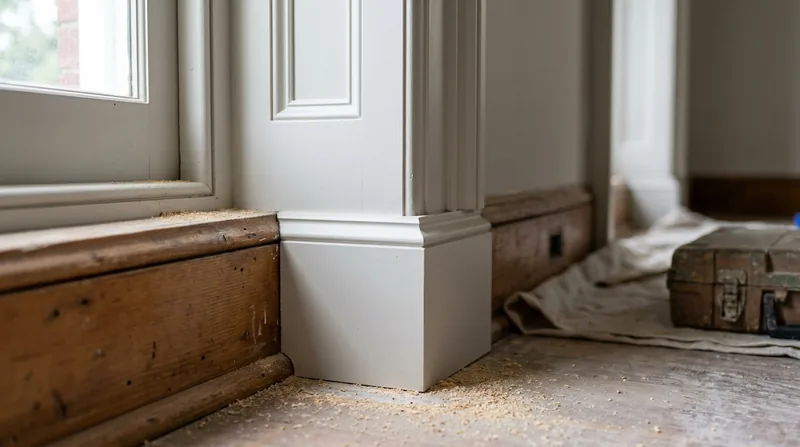




Finish & Trim Carpentry in Cincinnati separates a home that looks thrown together from one that feels intentional and well-built. Whether you live in a brick Italianate rowhouse in Over-the-Rhine, a hillside home in Mount Adams with terraced walls, or a post-war ranch on the East Side, the details matter. Tight miters at crown molding, scribed baseboards that follow uneven plaster, door casings with consistent reveals, and custom wainscoting or built-ins all require the same thing: a carpenter who understands the craft, not a handyman with a nail gun. Cincinnati's mix of historic homes and newer construction means we work with everything from original hardwood trim to modern paint-grade work, and we know how to match existing details or build new ones that look like they belong. This is the work that makes a room feel finished.
Why Finish & Trim Carpentry Matters in Cincinnati Homes
Cincinnati's residential landscape spans more than a century of building styles, and each one has its own trim language. Historic homes in Clifton, Price Hill, and Hyde Park were built with plaster walls and solid wood casing that fits tight to the frame. Newer subdivisions in Butler and Warren counties have drywall and modern stud spacing that requires a different approach. The freeze-thaw cycles of our four-season climate also mean that wood trim moves with humidity and temperature, so scribing and fitting work has to account for seasonal movement. A baseboard installed tight in winter will gap in summer if it's not done right. The same goes for crown molding in homes with plaster ceilings that are never perfectly flat. This is not decorative work that can be faked with caulk and paint. It has to be built.
- We scribe trim to fit uneven walls and ceilings so joints close tight without gaps or shadow lines.
- We measure and cut coped joints on crown molding so profiles lock together at inside corners instead of meeting at miters that shrink and open.
- We fit door casings with consistent reveals on all four sides, keeping the frame square and plumb even when the wall is not.
- We install wainscoting and paneling with proper blocking and fastening so it stays flat and solid for decades.
- We build custom shelving and built-ins that are sized to the room and finished with the same attention to detail as the rest of the trim.
These are the methods that separate real finish carpentry from work that looks acceptable from ten feet away but falls apart under close inspection.
Key info: Cincinnati homeowners often inherit trim work that was rushed or done by carpenters who didn't understand the local climate and building stock. We've replaced crown molding installed with butt joints instead of coped joints, baseboards that gap seasonally, and door casings that were shimmed crooked. The fix is to do it right the first time, which costs less than repair in the long run.
For more on how Cincinnati's building stock and climate drive carpentry decisions, see our work in wood rot repair, where the same attention to detail applies to structural issues.
How We Approach Finish & Trim Carpentry in Cincinnati
Our process starts with understanding what you want the room to feel like and what the existing trim language is. If you have original plaster walls and solid wood casing, we match the profile and fit it the way it was built in 1920. If you're working with modern drywall and paint-grade trim, we build to that standard. We take time to measure the room, identify where walls are out of plumb or ceilings are wavy, and plan the installation so joints are invisible and the trim reads as one continuous line. We use proper blocking, fastening, and finishing techniques so the work stays tight through Cincinnati's seasonal humidity swings. We don't cut corners with caulk, and we don't pretend that a room with uneven walls should have perfectly mitered corners that will gap in six months.
- We measure and mock up the layout on site to catch conflicts and plan the sequence before we cut any material.
- We identify high and low points on walls and ceilings and plan scribing or shims to handle them without visible adjustments.
- We cut and fit each piece to the room, not cut everything in the shop and hope it fits when we install it.
- We use fastening methods appropriate to the substrate, plaster or drywall, so trim stays solid and doesn't move.
- We finish all surfaces to the level of detail you expect, whether that's stain and polyurethane or paint and caulk.
This hands-on approach takes longer than assembly-line trim work, but the result is finish carpentry that looks intentional and lasts.
Real example: A home in Madeira needed crown molding in a living room where the ceiling was wavy and the walls leaned inward. We scribed the crown to the ceiling, used coped joints at the inside corners, and installed blocking behind the trim so it stayed solid. The room looks finished because the crown reads as one continuous line, not a collection of pieces fighting the room's geometry.
If you have custom built-ins or shelving in mind, the same precision applies.
Finish & Trim Carpentry Methods and Techniques
| Method | Description | Best For |
|---|---|---|
| Scribing | Tracing the profile of an uneven wall or ceiling onto trim so it fits perfectly without gaps or shadow lines. | Baseboards, crown molding, and wainscoting in homes with plaster or wavy drywall. |
| Coped Joints | Cutting the profile of one piece of trim to fit over the profile of the adjacent piece at inside corners, creating a tight joint that doesn't gap as wood moves. | Crown molding, base trim, and any profiled trim where inside corners meet. |
| Blocking and Backing | Installing solid wood or plywood behind drywall so trim fasteners have something solid to hold into, preventing movement and nail pops. | Modern drywall construction where studs don't line up with trim locations or where shelving and built-ins need support. |
| Custom Milling | Routing or shaping wood on site to match existing trim profiles or create custom details that don't come from the supplier. | Historic homes where original trim profiles are unique or where new work needs to blend seamlessly with existing details. |
| Reveal and Alignment | Installing door casings, window trim, and other framed openings with consistent spacing between the frame and the casing on all four sides. | Interior and exterior doors, windows, and any opening that needs a finished frame. |
Each method requires the right tools, experience, and patience. We invest in both.
Finish & Trim Carpentry Cost in Cincinnati: What to Expect
Finish carpentry is priced by the linear foot for trim work, by the piece for doors and openings, and by the project for custom work like built-ins and shelving. A room with crown molding and new baseboards in a Cincinnati home typically runs from about $1,200 to $2,500 depending on the room size, the complexity of the walls and ceiling, and the material you choose. Door casings start at around $150 to $300 per opening for paint-grade work and go higher for stain-grade or custom profiles. Custom shelving and built-ins are priced per project because the scope varies so much. The factors that move the price are straightforward: the linear footage of trim, the complexity of the room geometry, the material grade, and whether scribing or custom milling is needed. A room with square walls and a flat ceiling costs less than one where plaster walls are wavy and the ceiling slopes. A simple painted baseboard costs less than stain-grade hardwood with a custom profile. We provide a free estimate on site so you understand exactly what you're paying for and why.
For a full breakdown of our pricing structure, see our pricing overview. To get an estimate for your specific project, contact us at (513) 822-4039.
Finish & Trim Carpentry Near Me: What Cincinnati Homeowners Should Know When Hiring
Hiring a finish carpenter is different from hiring a general contractor or a handyman. You're paying for precision, craftsmanship, and the ability to solve problems on the fly when a wall isn't plumb or a ceiling isn't flat. Start by asking potential carpenters for photos of their work and references from Cincinnati homeowners. Visit a finished job if you can so you see the quality of the joints, the consistency of reveals, and how the trim reads in the room. Get at least two or three estimates so you understand the range and what different carpenters charge for. Ask about their approach to the specific challenges in your home. If you have plaster walls, do they know how to work with them? If you have historic trim, can they match the profile? If your room is out of square, how will they handle it? The cheapest estimate is rarely the best value in finish carpentry. You're buying experience, attention to detail, and the knowledge to do the work right the first time. Fully insured carpenters can document their work and coverage if needed. Once you've narrowed it down, call us for a free estimate. We'll walk through the project, explain our approach, and give you a price you can trust.
- Ask to see photos of similar work and references from recent projects in Cincinnati.
- Clarify whether the carpenter will handle all phases, including finishing and paint, or just the carpentry.
- Confirm that the carpenter is fully insured and can provide proof of coverage on request.
- Discuss the timeline so you understand how long the work will take and what disruption to expect.
- Get the estimate in writing with a clear scope so there are no surprises when the work starts.
The right finish carpenter becomes a resource for future projects because you trust the quality and the communication.
Finish & Trim Carpentry in Cincinnati: Pricing Guide
| Service | Price | Details |
|---|---|---|
| Crown molding or baseboard installation | Starting at $12-18 per linear foot | Includes material, labor, and finish; complexity of room geometry and wall condition moves price within range |
| Door casing or window trim | Starting at $150-300 per opening | Paint-grade standard profiles; stain-grade or custom milling increases cost; includes blocking and fastening |
| Wainscoting or paneling | Starting at $20-35 per linear foot | Depends on wall height, material, and finish; includes blocking, scribing to uneven walls, and paint or stain |
| Custom shelving or built-ins | On estimate | Scope varies widely; site visit required to measure, assess wall condition, and plan construction and finishing |
| Travel and estimate | Free | Included in Cincinnati and surrounding areas; response within 24 hours at (513) 822-4039, no obligation to proceed |
Indicative pricing, the exact cost depends on square footage, finish, and site access. Free personalized estimate within 24h at (513) 822-4039.


