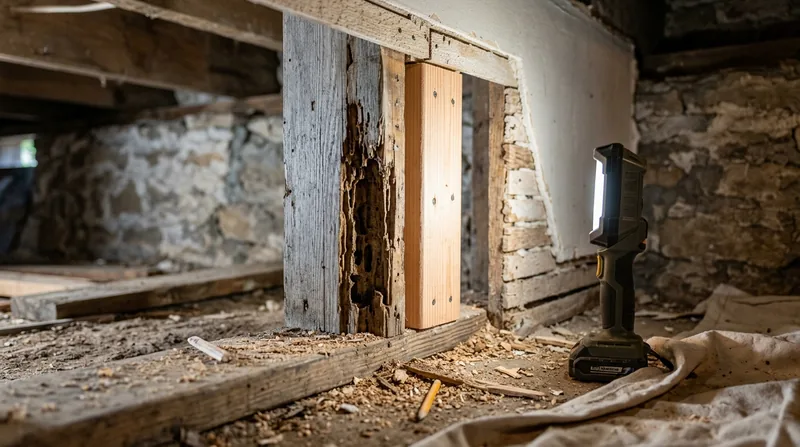




Termites don't kill a home overnight, but the damage they leave behind demands real carpentry repair. After your pest control inspector identifies the infestation and treatment begins, the structural damage remains. Cincinnati's humid summers, freeze-thaw winters, and the dense wood framing in our historic brick homes and suburban ranch properties create ideal conditions for termite activity across the city and suburbs like Mason, West Chester, and Blue Ash. We replace termite-damaged studs, sills, subfloor sections, and trim, restoring full structural integrity to floors, walls, and exterior framing. This isn't cosmetic work. The wood that termites hollow out loses its load-bearing capacity, and addressing it properly prevents future settlement, soft spots underfoot, and costly structural failure down the line.
Why Termite Damage Repair Matters in Cincinnati's Older Neighborhoods
Cincinnati's housing stock tells the story. Over-the-Rhine's Italianate rowhouses, the brick bungalows and American Foursquares of Hyde Park and Oakley, and the post-war brick ranches across the East Side and West Side suburbs all depend on solid wood framing hidden inside walls and under floors. Termites work silently behind plaster and drywall, hollowing out the very studs and joists that hold the structure together. The humid Ohio River valley climate, combined with our four-season freeze-thaw cycles, creates moisture conditions that both attract termites and accelerate wood decay once the infestation is gone. Without repair, a compromised floor joist or sill plate will continue to soften, sag, or fail entirely.
- We remove and replace termite-weakened studs in walls and structural framing to restore full load-bearing capacity.
- We sister or replace compromised floor joists and subfloor sections to eliminate soft, bouncy floors and prevent further settlement.
- We repair or replace damaged sill plates and rim joists at the foundation line where termite damage is most common.
- We restore exterior trim, fascia, and soffit sections eaten by termites to protect the rest of the framing from weather and future infestation.
- We work from your pest inspection report to target only the wood that needs replacement, keeping costs realistic and repair focused.
Catching termite damage early and repairing it correctly prevents the kind of structural decline that turns a $3,000 repair into a $15,000 replacement job five years later.
Cincinnati reality: Termite swarms peak in spring and early summer when humidity rises and wood moisture climbs. By fall, the damage is already done inside the framing. A pest inspection in summer often reveals damage that's been progressing for months. That's why homeowners in Mason, Fairfield, and Montgomery call us right after the exterminator leaves, before the problem spreads to load-bearing walls or the subfloor under the living room.
For more information on wood damage assessment and repair, see our wood rot and dry rot repair service, which uses the same repair and replacement methods for different damage pathologies.
The Cincinnati Building Department requires permits for structural repairs, including replacement of load-bearing studs or floor joists. We handle the permit process and coordinate with the building inspector to ensure the work meets code. For details on local building requirements, visit the Cincinnati Building Department website.
How We Repair Termite Damage: Step-by-Step Process
Termite repair starts with a clear understanding of what the pest inspector found. We don't treat the infestation, that's the exterminator's job, but we do the work that matters after they leave. We assess each damaged piece of wood, determine whether it can be reinforced or must be replaced entirely, and execute the repair to restore structural integrity and prevent future settling or failure. The work is methodical, code-compliant, and built to last.
- We review your pest inspection report and take measurements to identify all damaged framing, joists, studs, and trim.
- We assess whether damage can be repaired by sistering a new joist alongside the old or requires full replacement of the compromised member.
- We remove damaged wood carefully, supporting the floor or wall above to prevent settlement or collapse during the work.
- We install new framing lumber, sized and positioned to carry the load and meet current building code requirements for the Cincinnati market.
- We finish the repair with paint, stain, or trim restoration to match the existing interior or exterior finish.
- We coordinate with the Cincinnati Building Department inspector to verify the repair before we close up the wall or floor.
A typical floor joist repair in a Price Hill or Mount Auburn home takes two to three days. Structural work in load-bearing walls or under multiple rooms takes longer and often requires temporary support walls during the repair.
Local example: A homeowner in Walnut Hills discovered termite damage in the rim joist and three floor joists under the kitchen. The pest control report showed activity contained to that zone. We sistered two joists with new Douglas fir lumber bolted to the old framing, replaced the rim joist entirely, and reinforced the sill plate connection at the foundation. The work took three days, required one building permit inspection, and cost significantly less than replacing all four joists outright. The floor is now solid, and the structural integrity is fully restored.
For additional context on floor system repair, see our floor joist and subfloor repair service.
Repair Methods and When Each Applies
| Repair Method | What It Involves | Best For |
|---|---|---|
| Sistering | Bolting a new joist or stud alongside the damaged one to share the load and restore capacity without full removal. | Joists or studs with damage confined to one edge or localized section; situations where the old member can remain in place. |
| Full Replacement | Removing the damaged joist, stud, or beam entirely and installing new pressure-treated or solid-sawn lumber in its place. | Extensive hollowing or structural compromise where sistering would not restore full load capacity or where the old member is too weakened. |
| Sill Plate Repair | Replacing the wood sill that sits on the foundation, often in sections, and reanchoring the wall framing to the foundation. | Termite damage at the foundation line, common in Cincinnati's older brick homes where the sill is exposed to ground moisture. |
| Exterior Trim and Fascia Replacement | Removing and replacing fascia, soffit, trim boards, or exterior siding sections damaged by termites to restore weather protection. | Damage to the exterior envelope where moisture and pest entry can continue if not sealed and replaced promptly. |
Termite Damage Repair Cost in Cincinnati: What to Expect
Termite damage repair starts at $1,200 for localized joist or stud replacement in a single room or zone. Most jobs in Cincinnati fall between $2,000 and $6,000, depending on how many members need repair, whether sistering or full replacement is the right approach, and how much of the framing is compromised. Large-scale structural repairs, particularly when multiple load-bearing walls or extensive subfloor sections are involved, can exceed $10,000 and require an on-site estimate.
Several factors drive the final cost. The extent of damage is the primary variable: damage confined to one joist or rim section costs far less than damage spanning multiple joists or studs across several rooms. Access and complexity matter too. Damage under a finished basement floor requires more work to expose and repair than damage in an unfinished crawlspace. The need for temporary support walls during repair, required for load-bearing members, adds time and materials. Permit and inspection fees from the Cincinnati Building Department are separate from labor and materials but are a standard part of any structural repair. Finally, finishing work, such as restoring trim, painting, or matching existing stain, varies by the homeowner's standards and preferences.
We recommend getting two or three estimates from local carpenters before committing. Each estimate should itemize the damaged members, specify the repair method (sistering vs. replacement), note permit and inspection requirements, and provide a timeline. Our estimate is free and includes a walk-through of the damage, a clear explanation of what needs repair, and realistic pricing for the Cincinnati market. Call us at (513) 822-4039 or visit our pricing page for a detailed breakdown of costs by repair type.
Hiring a Carpenter for Termite Damage Repair Near Me: What Cincinnati Homeowners Should Know
Finding the right carpenter to handle termite damage repair is as important as the repair itself. This is structural work that affects the safety and longevity of your home, so the person you hire should be experienced, insured, and comfortable working with local building code and permit requirements. Here's what to look for when evaluating contractors in Cincinnati, West Chester, Mason, and the surrounding suburbs.
- Verify that the contractor is fully insured and can provide a current certificate of insurance covering general liability and workers compensation.
- Ask for references from recent termite damage repair jobs and follow up with at least two previous customers to discuss quality, timeline, and communication.
- Confirm that the contractor understands Cincinnati Building Department permit requirements and has experience coordinating with building inspectors for structural repairs.
- Request a written estimate that itemizes each damaged member, specifies the repair method, includes permit and inspection costs, and provides a realistic timeline.
- Clarify whether the contractor will handle the permit process or if you will need to submit it yourself, and understand who is responsible for scheduling inspections.
- Ask whether the contractor is EPA Lead-Safe Certified if your home was built before 1978, a requirement for any renovation work that disturbs paint or wood in older Cincinnati properties.
- Discuss the contractor's approach to working from your pest inspection report and confirm that they will not attempt any pest treatment or extermination themselves.
A quality carpenter will explain the damage clearly, propose repair methods that make structural and financial sense, and stand behind the work with a warranty. Avoid contractors who pressure you to replace wood that can be repaired or who promise to eliminate a termite infestation, that's outside the scope of carpentry work.
Ready to move forward? Contact us for a free estimate or call (513) 822-4039. We'll assess the damage, explain your options, and provide a clear, no-obligation quote for the work.
Termite Damage Repair in Cincinnati: Pricing Guide
| Service | Price | Details |
|---|---|---|
| Single joist or stud replacement | Starting at $1,200 | Includes removal, new lumber, bolting or fastening, and one building permit inspection for localized repair in one zone |
| Sistered joist repair (two to three members) | Starting at $2,400 | Bolting new joists alongside damaged framing in a single room or crawlspace, restoring load capacity without full removal of old members |
| Sill plate or rim joist replacement (single section) | Starting at $1,800 | Replacing the sill at the foundation line and reanchoring wall framing, common in Cincinnati's brick homes where termites attack the base |
| Multi-room or load-bearing wall repair | On estimate | Extensive damage across multiple joists, studs, or load-bearing members requires site assessment to confirm scope, materials, and structural requirements |
| Estimate and site visit | Free | Response within 24 hours at (513) 822-4039, includes full assessment of damage, repair options, and itemized quote with no obligation to proceed |
Indicative pricing, the exact cost depends on square footage, finish, and site access. Free personalized estimate within 24h at (513) 822-4039.


