Dry Rot vs Termite Damage: Understanding the Difference
If you've noticed soft, crumbling wood in your Cincinnati home, you're right to be concerned. But before you panic, it's important to understand whether you're dealing with dry rot or termite damage. While both can cause serious structural issues, they require very different treatment approaches. Dry rot is a fungal decay that thrives in damp conditions, while termites are wood-eating insects that can devastate a home's wooden structure over time. Getting the diagnosis right is the first step toward protecting your investment.
Many homeowners mistakenly assume that any wood damage means termites are at work. In reality, dry rot is far more common in the Cincinnati area due to our humid climate and seasonal moisture fluctuations. Understanding the key differences between these two types of damage will help you take the appropriate action quickly. Whether you need Wood Rot & Dry Rot Repair or Termite Damage Repair, the sooner you identify the problem, the sooner you can prevent further deterioration.
What Does Wood Rot Look Like? Visual Signs of Dry Rot
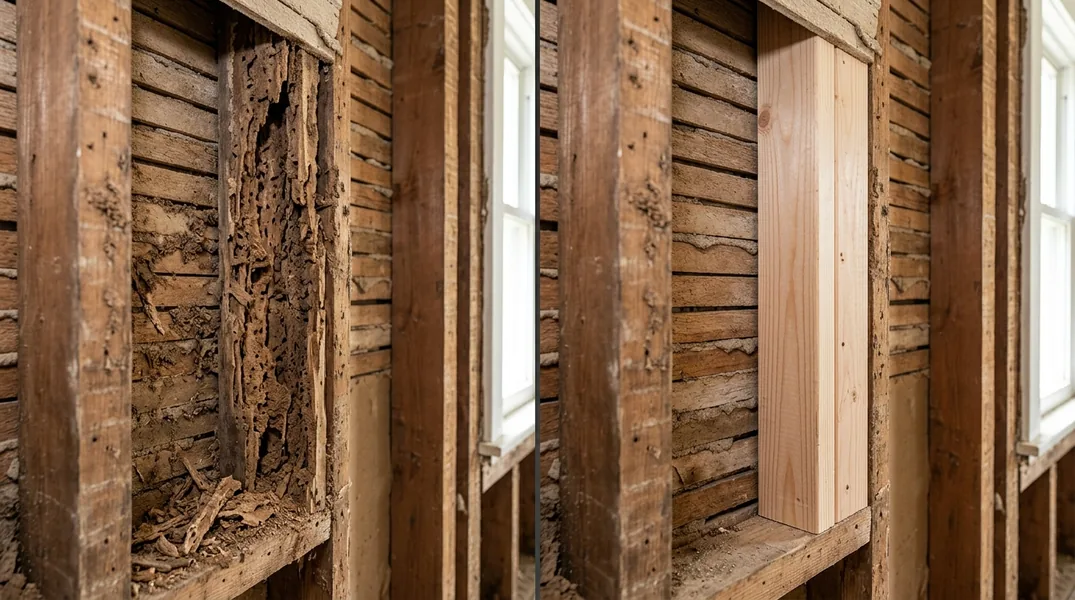
Dry rot has a distinctly recognizable appearance that sets it apart from other types of wood damage. The affected wood typically becomes soft, spongy, and darkened in color, often appearing almost black or deep brown. One of the most telling signs is that the wood will crumble easily when you press on it with a screwdriver or other tool. You may also notice a musty, earthy odor around the affected area, which is caused by the fungal growth breaking down the wood's cellular structure. In advanced stages, the wood may shrink and develop deep cracks that run across the grain, creating a distinctive cube-like pattern.
Another visual indicator of dry rot is the presence of mycelium, a white or gray cotton-like growth on the wood's surface. This fungal network spreads through the wood and can even travel across non-wooden materials like masonry to reach new wood sources. If you spot these signs in your basement, crawl space, or around your foundation, it's time to get a professional assessment. The longer dry rot goes untreated, the more extensive the structural damage becomes, potentially affecting everything from floor joists to load-bearing beams.
Signs of Termite Damage in Wood: What to Look For
Termite damage presents a very different visual profile from dry rot. Termites eat wood from the inside out, which means the exterior surface may appear relatively normal while the interior is hollowed out. This is one of the most dangerous aspects of termite infestations, because the damage can be extensive before you even notice it. When you do spot termite damage, you'll often see wood that looks papery, blistered, or has a honeycomb-like appearance inside. The wood may also sound hollow when tapped, and you might notice small exit holes or mud tubes running along the wood surface or foundation walls.
Unlike dry rot, termite damage typically doesn't produce a soft, crumbly texture on the surface. Instead, the wood maintains its structural integrity on the outside while being consumed from within. You may also spot mud tubes (pencil-sized tunnels made of soil and saliva) running up your foundation or along wooden beams. These tubes are highways that termites use to travel while staying protected from air exposure. Fresh mud tubes indicate active termite colonies, which means immediate action is needed. If you suspect termite activity in your home, professional Termite Damage Repair should be your priority.
Moisture Content: Why Dry Rot Thrives in Cincinnati Homes
The key environmental factor that separates dry rot from termite damage is moisture. Despite its misleading name, dry rot actually requires significant moisture to develop. It thrives in wood that maintains a moisture content between 20 and 60 percent. In the Cincinnati region, our humid summers, spring rains, and winter snowmelt create ideal conditions for fungal growth. Basements, crawl spaces, bathrooms, and areas around poorly maintained gutters are prime locations for dry rot to establish itself. If your home has inadequate ventilation, plumbing leaks, or foundation moisture problems, you're at higher risk.
Termites, on the other hand, don't require the wood itself to be wet, though they do prefer damp conditions for their own survival. They're more attracted to the wood as a food source and can cause damage even in relatively dry wood if they maintain their own moisture through their mud tubes and colonies. This is why termite infestations can sometimes go undetected for longer periods. If you've experienced water damage, roof leaks, or have poor drainage around your foundation, addressing these moisture issues is critical. Getting a professional inspection can help identify both active decay and potential vulnerabilities before they become major problems.
Wood Rot vs Termite Damage: Damage Patterns and Progression
The way these two problems spread through your home tells an important story about what you're dealing with. Dry rot spreads more predictably through wood grain and follows moisture pathways. It typically affects larger areas in a more uniform pattern, creating extensive soft zones that weaken the overall structure. Once dry rot takes hold in a joist, beam, or subfloor, it can spread to adjacent wood relatively quickly if moisture conditions remain favorable. The damage is often concentrated in specific zones rather than scattered throughout the home. This is why Floor Joist & Subfloor Repair or Beam Replacement & Load-Bearing Wall Removal may be necessary for severe cases.
Termite damage, by contrast, can appear in scattered locations throughout your home as different colonies work independently. You might find damage in your basement in one area and in your attic in another, with relatively undamaged wood in between. Termites follow their food source and can travel long distances through mud tubes. The damage pattern is often more linear, following the grain of the wood or the pathways of termite galleries. Because termites work inside the wood, the structural failure can be sudden and catastrophic. A beam that appears sound on the outside might collapse without warning if termites have thoroughly hollowed it out. This unpredictability makes termite infestations particularly dangerous from a safety standpoint.
Professional Diagnosis: When to Call a Wood Rot and Termite Expert Near Me
If you've identified any suspicious wood damage in your home, the smartest move is to get a professional assessment. Cincinnati Carpentry specializes in identifying and repairing both dry rot and termite damage, and our team can provide a definitive diagnosis based on visual inspection, moisture testing, and structural evaluation. Attempting to diagnose these problems yourself can lead to missed damage or incorrect treatment, which wastes time and money while your home continues to deteriorate. A trained professional will know exactly what to look for and can identify damage in hidden areas like crawl spaces and wall cavities that you might never see on your own.
During a professional inspection, we'll examine the extent of damage, identify the underlying cause (moisture, pest activity, or both), and recommend the appropriate repair strategy. We'll also assess whether the damage affects critical structural elements and whether reinforcement or replacement is necessary. The cost of addressing these problems early is significantly less than waiting until they become catastrophic. If you've noticed any signs of wood damage or have concerns about your home's structural integrity, contact Cincinnati Carpentry at (513) 822-4039 or request a free estimate today. We serve the greater Cincinnati area and surrounding communities, and we're ready to help protect your home.
Looking for a professional carpentry contractor in Cincinnati? Cincinnati Carpentry responds fast for all your carpentry needs.
Get a Free QuoteOur services: Wood Rot & Dry Rot Repair · Termite Damage Repair · Floor Joist & Subfloor Repair