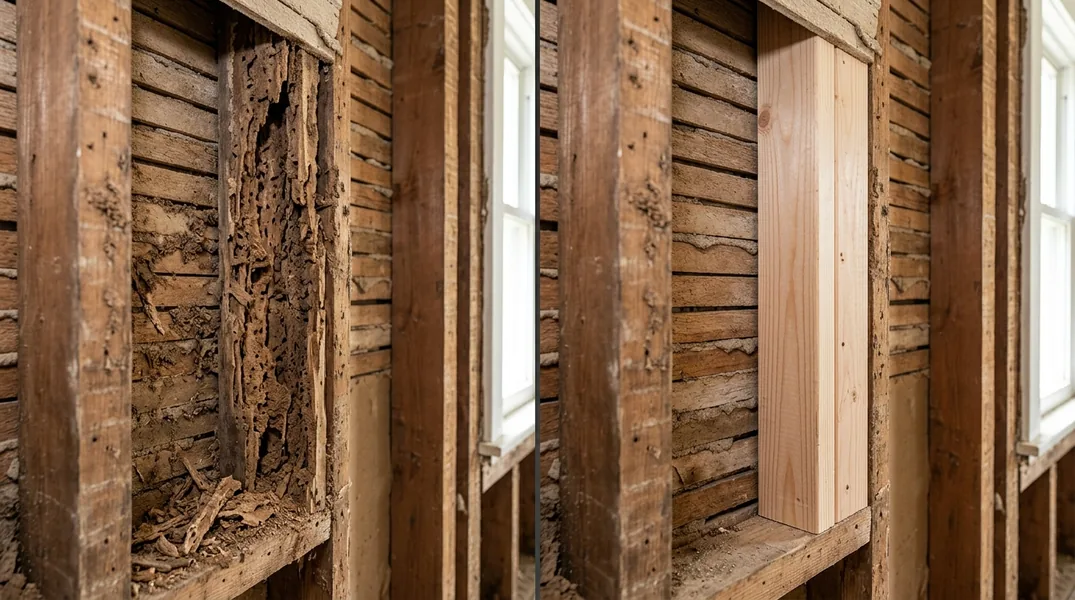
The Hard Truth: Most Homeowners Insurance Doesn't Cover Wood Rot or Termite Damage
If you've discovered wood rot in your Cincinnati home or suspect termite damage, you may be hoping your homeowners insurance will foot the bill for repairs. Unfortunately, the answer is almost always no. Most standard homeowners insurance policies explicitly exclude coverage for wood rot, dry rot, and termite damage. This exclusion exists because these issues are typically considered maintenance problems or the result of neglect rather than sudden, accidental damage.
Insurance companies view wood rot as a gradual deterioration that homeowners should have prevented through proper maintenance. Similarly, termite infestations are seen as preventable pest problems rather than covered perils. This distinction is crucial for homeowners to understand, especially in the Greater Cincinnati area where moisture and humidity can accelerate wood decay. The good news is that understanding these exclusions helps you plan ahead and take preventive measures to protect your investment.
Why Insurance Companies Exclude Wood Rot and Termite Damage
The exclusion of wood rot and termite damage from homeowners insurance policies isn't arbitrary. Insurance companies use actuarial data and risk assessment to determine what they will and won't cover. Wood rot and termite damage fall into a category of issues that are considered the homeowner's responsibility to prevent and maintain. From an insurer's perspective, wood rot develops over months or years due to moisture exposure, poor ventilation, or lack of maintenance. This gradual process doesn't meet the definition of a covered loss, which typically requires sudden and accidental damage.
Termite damage presents a similar problem for insurers. Pest infestations are generally excluded because they're preventable through regular inspections and professional pest control measures. Once termites have infested a home, the damage compounds over time, much like wood rot. Insurance companies argue that homeowners who maintain their properties and conduct regular inspections can catch these problems early, preventing catastrophic damage. This is why taking a proactive approach to Wood Rot & Dry Rot Repair and pest prevention is so important for protecting your home's structural integrity.
When Insurance Might Actually Cover Related Damage
While wood rot and termites themselves aren't covered, there are specific scenarios where your homeowners insurance might cover damage related to these issues. If a covered peril, such as a storm or burst pipe, causes water damage that leads to wood rot, your insurance may cover the water damage portion. However, the resulting wood rot itself would still likely be excluded. For example, if heavy rains cause a roof leak and water seeps into your attic, creating conditions for wood rot to develop, the initial water damage might be covered, but you'd be responsible for repairing the rotted wood.
Another situation involves secondary damage. If termites weaken a structural beam and it subsequently fails due to a covered event, the insurance company might cover the resulting damage from the failure but not the termite infestation itself. This is why it's essential to read your specific policy carefully and discuss these scenarios with your insurance agent. In Cincinnati, homeowners dealing with structural concerns should also consider professional assessment for issues like Floor Joist & Subfloor Repair or Beam Replacement & Load-Bearing Wall Removal to understand the full scope of damage.
What You Should Do If You Discover Wood Rot or Termite Damage
Discovery of wood rot or termite damage can be stressful, but taking immediate action is critical. First, contact your insurance company to report the damage and ask specifically whether any portion might be covered under your policy. Even though the damage itself likely won't be covered, documenting everything creates a record that may be useful for future claims or if you sell your home. Next, stop the source of the problem. For wood rot, this means addressing any moisture issues, improving ventilation, and fixing leaks. For termites, contact a professional pest control company to eliminate the infestation before damage spreads further.
After addressing the immediate problem, you'll need to hire a qualified contractor to repair the damage. In Cincinnati and surrounding areas like Blue Ash and Mason, Cincinnati Carpentry specializes in both Wood Rot & Dry Rot Repair and Termite Damage Repair. A professional assessment will determine the extent of the damage and whether structural repairs are necessary. Don't delay in addressing these issues, as they compound over time and can compromise your home's safety and value.
Wood Rot & Dry Rot Repair Cost in Cincinnati: What to Budget
Since insurance won't cover wood rot or termite damage, understanding repair costs helps you plan financially. The cost of repairs varies dramatically based on the extent of the damage and the location of the affected wood. Minor surface rot in trim or siding might cost a few hundred dollars, while extensive rot affecting floor joists or structural beams can run into thousands. In Cincinnati, Montgomery, and nearby communities, most homeowners find it helpful to get a detailed assessment before budgeting for repairs.
The best way to understand your specific repair pricing is to schedule a professional inspection. Cincinnati Carpentry offers a free estimate that includes a thorough evaluation of the damage and a transparent breakdown of repair costs. This allows you to make an informed decision about repairs and potentially prioritize which areas to address first if budget is a concern. Early detection of wood rot or termite damage can save you thousands in repair costs, making regular inspections a worthwhile investment in your home's longevity.
Prevention Is Your Best Insurance: Protecting Your Cincinnati Home
Since insurance won't protect you from wood rot and termite damage, prevention becomes your primary defense. Regular home inspections, ideally twice per year, can catch early signs of moisture problems, pest activity, or wood decay before they become serious. Pay special attention to areas prone to moisture, such as basements, crawl spaces, attics, and areas around plumbing and HVAC systems. Maintain proper grading around your foundation to ensure water drains away from your home, keep gutters clean and functioning properly, and address any leaks immediately.
For termite prevention, have your home inspected annually by a pest control professional, especially if you live in an area with a history of termite activity. Reduce wood-to-soil contact around your foundation, maintain adequate ventilation in crawl spaces, and avoid storing firewood or lumber against your home's exterior. When you do identify problems, professional contractors like Cincinnati Carpentry can help with repairs and provide guidance on preventing future issues. Taking these preventive steps protects your home's structural integrity and saves you from potentially devastating repair bills. If you suspect wood rot or termite damage, don't wait to investigate. Call Cincinnati Carpentry at (513) 822-4039 to schedule your free estimate today.
Looking for a professional carpentry contractor in Cincinnati? Cincinnati Carpentry responds fast for all your carpentry needs.
Get a Free QuoteOur services: Wood Rot & Dry Rot Repair · Termite Damage Repair · Floor Joist & Subfloor Repair