Why Is My Floor Sagging? Common Causes in Older Cincinnati Homes
If you own an older home in Cincinnati, a sagging floor is more than just an aesthetic concern. It's a structural red flag that demands attention. The Queen City's hillside neighborhoods, with their distinctive Victorian and early 20th-century architecture, are particularly prone to foundation and floor issues due to soil settlement, moisture infiltration, and decades of wear.
Sagging floors typically stem from one of several root causes. The most common culprit is Wood Rot and Dry Rot Repair damage to the floor joists themselves. When moisture seeps into your basement or crawl space, wood begins to decay, losing its structural integrity. The joists become soft, spongy, and unable to support the weight above them. In older homes, especially those built on hillside foundations where water management was less sophisticated, this is remarkably common.
Foundation settlement is another major cause. As soil beneath your home shifts or compacts over decades, the foundation can settle unevenly. This is especially true in Cincinnati's hilly terrain, where soil composition varies significantly from one neighborhood to another. When one section of the foundation drops even a fraction of an inch relative to another, the floor above develops a noticeable slope. Sometimes the sagging is gradual enough that homeowners don't notice until they spot a marble rolling across the kitchen floor or a door that no longer closes properly.
Undersized or damaged support beams, inadequate support posts, or Termite Damage Repair can also cause sagging. Termites are less common in Cincinnati than in warmer climates, but they do occur, and the damage they cause to structural members is severe. Similarly, if the original builder used joists that were too small for the span they covered, or if joists have developed cracks and splits over time, the floor will eventually sag under normal weight.
Floor Joist Repair and Sistering: Understanding Your Options
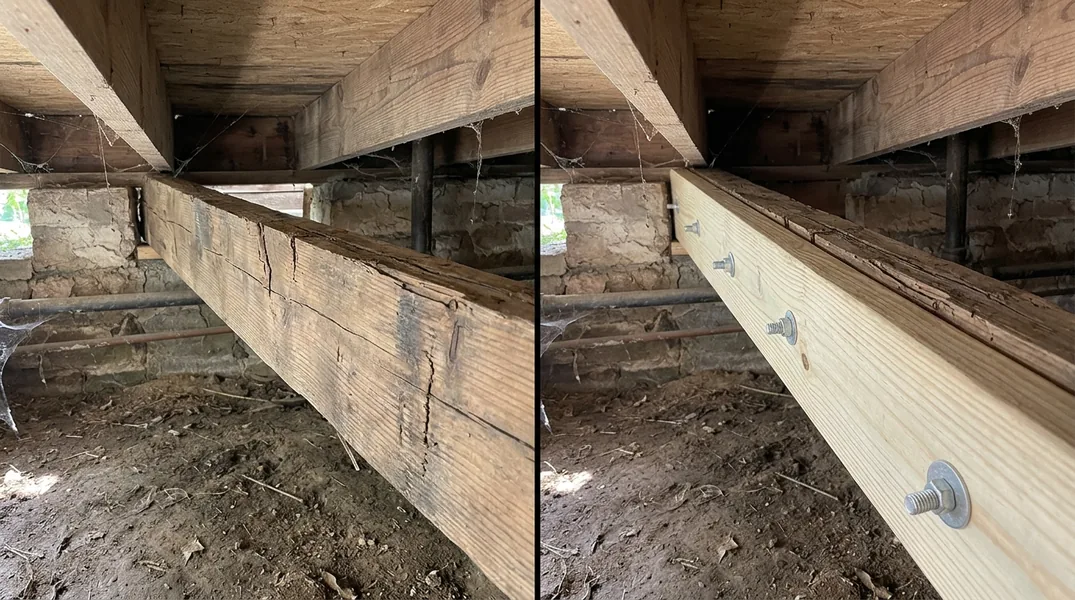
When you've identified that your sagging floor is caused by damaged joists, you have several repair pathways. The most common and cost-effective solution for many homeowners is Floor Joist and Subfloor Repair using a technique called sistering. This involves installing a new, sturdy piece of lumber alongside the damaged joist and fastening them together with bolts or nails, effectively creating a doubled joist that can handle the structural load.
Sistering floor joists is an elegant solution because it preserves the existing structure while reinforcing it. Rather than removing the entire damaged joist (which can be invasive and expensive), the carpenter installs a sister joist that shares the load. The sister joist must be the same depth and grade as the original and should extend the full length of the damaged section, or ideally, longer. When done correctly, sistering can restore a sagging floor to near-level and prevent further deterioration.
However, sistering isn't always the right answer. If the joist damage is extensive, if multiple joists are compromised, or if the damage is concentrated at a critical support point, full joist replacement may be necessary. In some cases, especially in older Cincinnati homes where the original framing was undersized, a Beam Replacement and Load-Bearing Wall Removal project might be the most permanent solution. This involves installing a new support beam that can carry the load across a wider span, eliminating the need for multiple smaller joists in that area.
The choice between sistering and replacement depends on the extent of damage, the age and condition of the surrounding structure, and your long-term goals for the home. A professional inspection is essential before deciding. The carpenter will assess how much of the joist is compromised, check for active moisture or pest issues, and evaluate whether the foundation itself is stable enough to support the repair.
Hillside Foundations and Cincinnati's Unique Challenges
Cincinnati's topography creates specific foundation challenges that homeowners in flatter regions rarely face. Many older homes, particularly in neighborhoods like Mount Adams, Clifton, and Hyde Park, were built on hillsides with foundations that cut into the slope. This design, while practical for the era, creates a natural pathway for water to migrate toward the foundation walls, especially during heavy rains or spring thaw.
When water reaches the foundation and seeps into the basement or crawl space, it doesn't just create dampness. Over time, moisture wicks up into the wooden structure above the foundation. This is where floor joist rot begins. The wood absorbs moisture, fungal spores germinate, and decay progresses. In hillside homes, the problem is often worse on the uphill side of the structure, where groundwater naturally accumulates.
Foundation settlement on hillsides is also more pronounced. The soil beneath a hillside foundation experiences different pressures than level-ground soil. Erosion, soil consolidation, and the weight of the structure itself can cause uneven settling. If the uphill side settles differently than the downhill side, the floor develops a pronounced slope. This is why many older Cincinnati homeowners notice their floors tilt noticeably toward the back or front of the house.
Addressing sagging floors in hillside homes often requires a two-part approach. First, the moisture problem must be controlled. This might involve improving drainage around the foundation, installing or upgrading a sump pump system, or applying waterproofing treatments to foundation walls. Second, the structural damage to the joists must be repaired. Without solving the moisture issue first, any joist repair will eventually fail as new decay begins.
Sagging Floor Repair Cost in Cincinnati: What to Budget
The pricing for sagging floor repair varies widely depending on the scope of work, the number of joists affected, and whether additional structural work is needed. For homeowners considering this repair, understanding the cost drivers helps set realistic expectations.
A simple sistering repair for one or two joists typically costs between $1,500 and $4,000, depending on the joist length, accessibility, and local labor rates. If the crawl space is tight or if the damaged joists are in a difficult-to-reach location, labor costs climb. If you need to sister five or more joists, or if the damage extends across a large area, you're looking at $5,000 to $12,000 or more. Full joist replacement is more expensive, often ranging from $3,000 to $8,000 per joist depending on complexity.
Beam replacement projects, which are sometimes necessary in homes with extensive structural damage, can cost $8,000 to $25,000 or higher. These larger projects often involve temporary support structures, removal of existing beams, and installation of new steel or engineered lumber beams. If load-bearing walls need to be modified or removed as part of the solution, costs increase further.
Don't forget about the moisture control work that often must precede or accompany joist repair. Foundation waterproofing, drainage improvements, or sump pump installation can add $2,000 to $8,000 to your project. However, this investment protects your repair and prevents future damage, making it worthwhile.
The best way to understand your specific costs is to schedule a free estimate with a qualified carpenter. Cincinnati Carpentry offers detailed assessments that identify all the issues affecting your floor and provide transparent pricing for each component of the repair. Call (513) 822-4039 to arrange an inspection and get a personalized quote.
Signs Your Floor Needs Professional Attention Right Now
Not every slightly uneven floor requires immediate repair, but certain warning signs indicate that professional evaluation is urgent. If you notice a sudden change in floor level, a new slope that developed over weeks or months rather than years, or if the sagging is accompanied by cracks in drywall, sticking doors, or visible mold, these are red flags that demand quick action.
Listen to your floor as well. Creaking, bouncing, or excessive movement when you walk across certain areas suggests that joists are compromised and no longer providing stable support. If you have a basement or crawl space, inspect it for visible rot, soft wood, water stains, or active moisture. These conditions directly correlate with floor sagging above.
If you live in an older Cincinnati home and have never had a professional structural inspection, consider scheduling one proactively. A carpenter can identify early-stage rot, moisture problems, or foundation issues before they become expensive repairs. Early intervention often means the difference between a $2,000 repair and a $15,000 project.
Getting Started: Next Steps for Cincinnati Homeowners
If you suspect your floor is sagging, the first step is a professional inspection. Cincinnati Carpentry specializes in identifying and repairing structural issues in older homes, with deep experience in the unique challenges that hillside foundations and aging wood framing present. Our team will assess the cause of the sagging, evaluate the extent of any damage, and recommend the most effective and cost-efficient repair approach for your situation.
Don't wait for the problem to worsen. Sagging floors can indicate serious structural issues that, if left unaddressed, become progressively more expensive and potentially dangerous. Contact Cincinnati Carpentry today at (513) 822-4039 or visit our website to request a free estimate. We serve Cincinnati and the surrounding areas, and we're ready to help restore your home's structural integrity.
Looking for a professional carpentry contractor in Cincinnati? Cincinnati Carpentry responds fast for all your carpentry needs.
Get a Free QuoteOur services: Wood Rot & Dry Rot Repair · Termite Damage Repair · Floor Joist & Subfloor Repair